Contract limits that warn you instead of stopping work
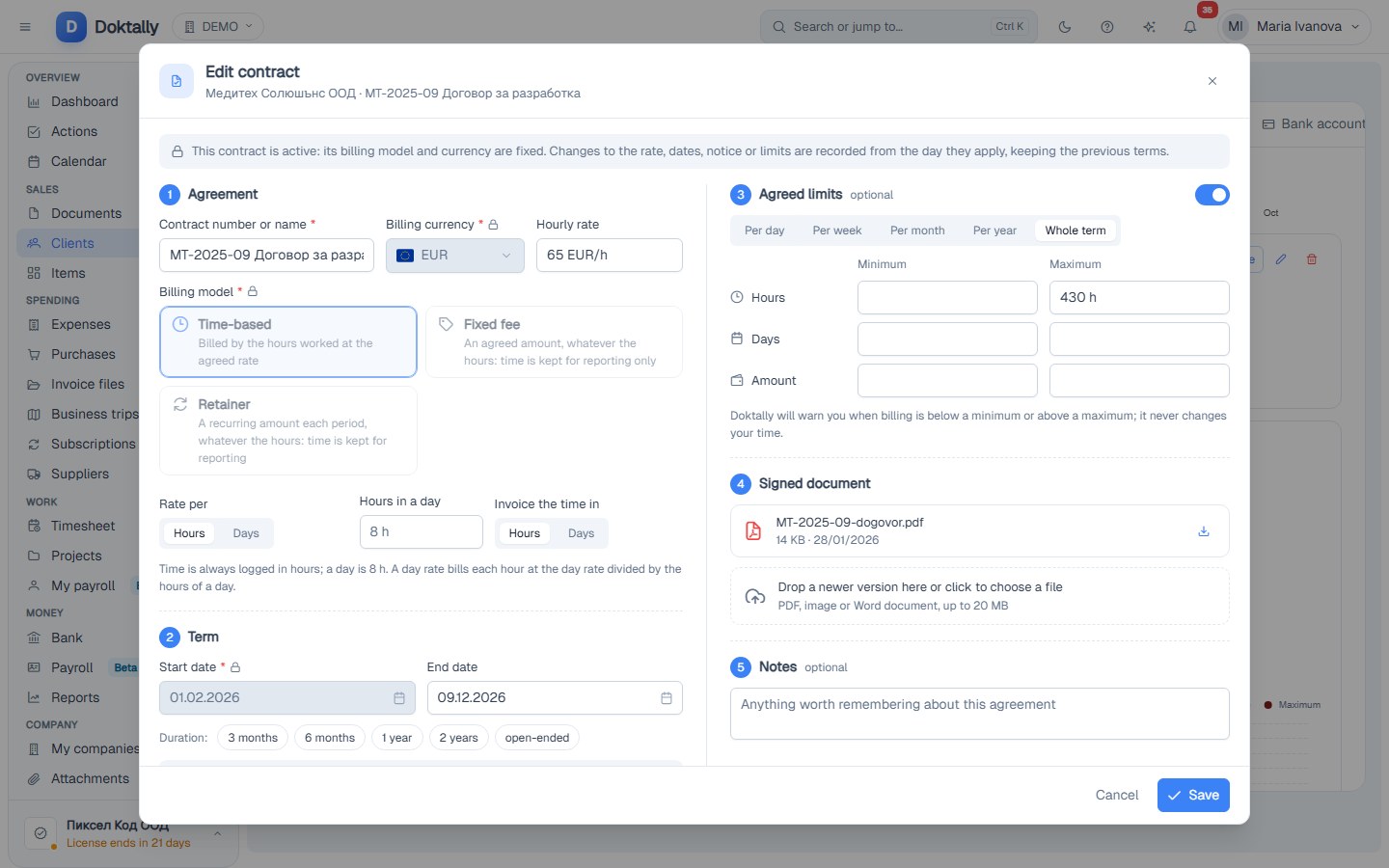
Minimums and maximums in hours, days or money are counted per period, prorated for partial months, and raise an alert at 80 %. A missed minimum can be topped up on the invoice.
The problem
The contract says at most 120 hours a month and at least 40. Nobody counts until the invoice is due, and then it is too late: the team worked 135 hours that the client will not pay, or the minimum was missed and the difference was never billed.
How Doktally solves it
- Limits on the contract, optional: minimum and maximum hours, days (for day rates) or amount, per day, week, month, year or the whole term. When hours and days are both set, the tighter maximum applies.
- Fair for partial periods: a monthly maximum of 120 hours on a contract that starts on 16 September allows 60 hours in September.
- An alert at 80 % of a maximum (the default, set per user) and again when it is passed. Time tracking is never stopped: the limit informs, people decide.
- A missed minimum is offered as one top-up line in the readiness check, never added on its own; once chosen it is recalculated on every rebuild and dropped if the minimum is met after all.
- Deadlines too: the last day to give notice, with a reminder 14 days before it by default.
The result
Hours over the cap are seen while they can still be discussed, and the minimum the client agreed to is always billed.
Technologies
Contracts, Limits, Java
- Published: 2026-11-19
- Project: Doktally — Invoicing, time billing and VAT for small businesses
- Case study